
Sleep Study for Sleep Related Problems
Sleep Studies in Virginia and Maryland — In-Lab and Home Sleep Testing
Comprehensive Sleep Care Center offers the full range of diagnostic sleep studies at our 11 AASM-accredited sleep centers across the Washington, DC metro area. Whether you need an in-laboratory overnight polysomnography or a home sleep apnea test, CSCC’s board-certified sleep physicians and registered technologists deliver accurate, gold-standard diagnostic results.
Types of Sleep Studies at CSCC
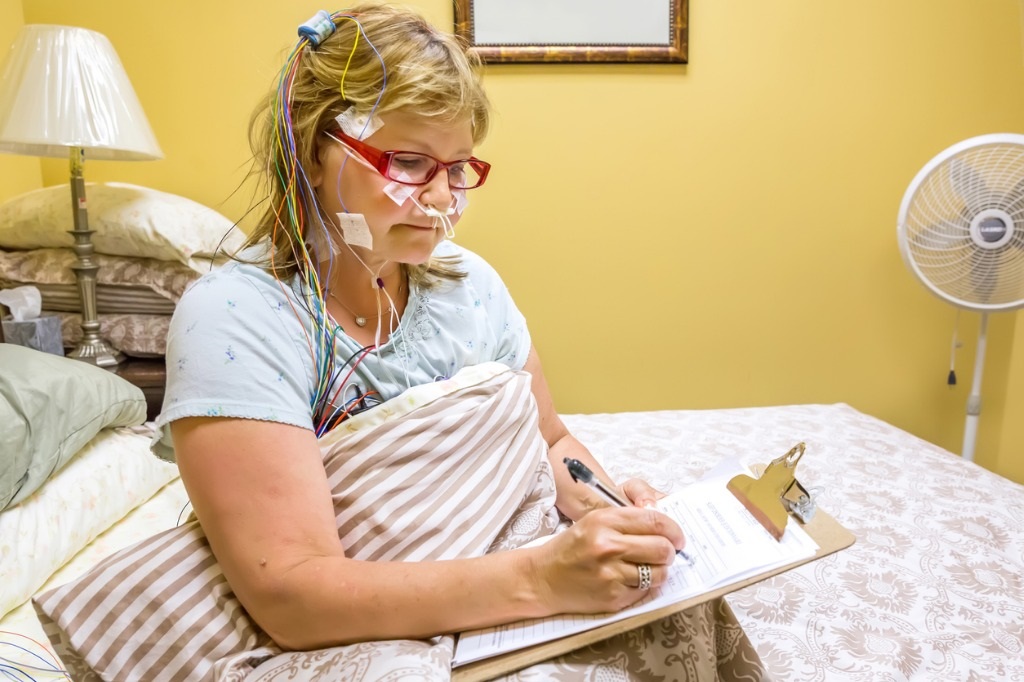
A polysomnography (PSG) is a comprehensive overnight sleep study conducted in one of our state-of-the-art sleep centers. It is the gold standard for diagnosing sleep disorders. During a PSG, sensors monitor:
- Brain waves (EEG) — to identify sleep stages
- Eye movements (EOG) — to detect REM sleep
- Muscle activity (EMG) — to identify parasomnias and limb movements
- Heart rhythm (EKG)
- Breathing patterns — respiratory effort and airflow
- Blood oxygen saturation (pulse oximetry)
- Leg movements — to detect PLMD and RLS-related movements
- Body position
A registered polysomnographic technologist (RPSGT) monitors your study throughout the night from an adjacent room. Results are reviewed and interpreted by a board-certified sleep physician, who provides a detailed report and treatment recommendations.
CPAP Titration Study
A CPAP titration study is an in-lab overnight study conducted after a sleep apnea diagnosis to determine the optimal CPAP pressure setting for your treatment. The technologist adjusts the CPAP pressure throughout the night while monitoring your sleep and breathing to find the setting that effectively eliminates apneas with maximum comfort.
Split-Night Study
A split-night study combines the diagnostic PSG and CPAP titration into a single overnight session. In the first portion of the night, baseline sleep is recorded without CPAP. If sleep apnea is confirmed, CPAP titration begins in the second half of the night. Split-night studies save time and cost when sleep apnea is highly likely based on symptoms and clinical history.
Multiple Sleep Latency Test (MSLT)
The MSLT is the standard diagnostic test for narcolepsy and idiopathic hypersomnia. Conducted during the day following an overnight PSG, it measures how quickly a patient falls asleep and whether they enter REM sleep during five scheduled nap opportunities.
Maintenance of Wakefulness Test (MWT)
The MWT measures a patient’s ability to stay awake during quiet, low-stimulation conditions. It is used to assess the effectiveness of narcolepsy treatment and to evaluate wakefulness for safety-critical occupations (such as commercial drivers and pilots).
Home Sleep Apnea Test (HSAT)
For appropriate candidates — typically adults with a high pre-test probability of moderate to severe obstructive sleep apnea and no significant comorbidities — a home sleep apnea test allows diagnostic recording in the comfort of your own bed. CSCC provides the testing device, instructions, and full physician review of results.
What to Expect at Your CSCC Sleep Study
- Arrive at your scheduled time (typically between 8:00–10:00 PM for overnight studies)
- Complete brief intake paperwork and change into comfortable sleep clothing you bring from home
- The technologist applies sensors to your scalp, face, chest, and legs using gentle adhesive — this takes 30–45 minutes
- Lights out and sleep begins — the technologist monitors you remotely throughout the night
- Wake time is typically 5:00–5:30 AM; sensors are removed and you are free to leave
- Your study is scored and reviewed by a board-certified sleep physician
- Results and treatment recommendations are communicated at a follow-up appointment
Our Sleep Center Amenities
- Private bedrooms with comfortable queen-size beds
- Flat-screen TVs and complimentary Wi-Fi
- Recliners for pre-sleep relaxation
- Bariatric hospital beds available at select locations
- Free parking at most locations (except Arlington and Bethesda)
- Open 7 nights a week for maximum scheduling flexibility
What should I bring to my sleep study?
Bring comfortable pajamas or sleep clothes, your toiletries, any medications you take at night or in the morning, and any comfort items (pillow, book, etc.) that help you sleep. Avoid caffeine after noon on the day of your study and do not nap on the day of the study.
Will I be able to sleep during a sleep study with all those sensors?
Most patients sleep adequately during their sleep study. The sensors are lightweight and attached with soft adhesive and should not be painful or significantly uncomfortable. Technologists are trained to help patients relax and get to sleep. Even if you sleep less than a full night, CSCC’s physicians can usually obtain sufficient data for diagnosis.
How long does it take to get results from my sleep study?
CSCC sleep physicians typically review and interpret your study within a few days of completion. A follow-up appointment will be scheduled to discuss your results and treatment options. Your test results will be provided to your referring or primary care physician if you provided us with their information.
Will insurance cover my sleep study at CSCC?
Most insurance plans cover diagnostic sleep studies when medically indicated. As an independently owned center, CSCC patients often pay significantly less than at hospital-based sleep labs.
Schedule Your Sleep Study Today
CSCC sleep centers are open 7 nights a week across 11 Virginia and Maryland locations. Call (703) 729-3420 or book online at comprehensivesleepcare.com.